Remembering Shim (60,000-59,980BC)
My journey through Tom Holland’s Dominion continues. A ritual of active listening, offset by intermittent taps of the (-30 sec) button. Somehow I have been able to track the continuous flow of names and places, as our current timeline advances with every paragraph. I imagine what it must have been like to be someone like Pope Gregory VII, to live a life in the early Middle Ages, knowing (with some ambiguity) what came before through already degraded codices and unaware of the generations that would follow beyond his meager life. That we all mutually trust in the reliability of history, to a reasonable extent, is a miracle greater than any prayer of healing, in my opinion.
Time is strange like that.
A wealth of information has been transmitted since the first hominids began to speak, using words, syllables, basic grammar, vowels, consonants, et al. And what has stuck with me, just exploring the early church’s continuity, is the vastness of human history. Only 5,000 years ago do we have evidence of recorded history in the form of writing samples. That we have existed for potentially 300,000 years, unless we find evidence to the contrary, we have only been able to account for 1.6% of that. With the advent of agriculture, our world became “domesticated” about 12,000 years ago. So, being able to settle down and generate a surplus food supply, in that regard we were finally able to learn our letters. That church history is so dense between 3BC and 1000AD, it’s a wonder that we have been able to compile this history. Even more so, it’s a wonder that those in the thick of such a cultural revolution could compile and reference as much as they did about the recent events of the previous 200-300 years before them.
But that beings created in the image of God have walked this earth for so long, and have largely been forgotten, is a sobering reality. I Imagine Shim, my hypothetical Middle Paleolithic man, living along the coast of the Black Sea, moving with his tribe as the seasons progressed. That Shim had a family, had children, had emotions, and daily rhythms, means that he had intrinsic value. That no one has thought of him for 62,000 years is incredible, but that is how time advances, isn’t it? Shim knew how to make fire, something both mundane and sacred at once. He knew well that it burned things, generated heat, cooked meat, and allowed him and his tribe to stay up later into the night. Without sunlight to hunt, fire could only illuminate the intimate spaces between himself and his immediate community, so they had to tell stories to pass the time. (Or go to sleep and hope that a rival tribe didn’t come along and murder them for their animal skins and tools.) Fire was both mundane and profound, something with utility but also great destructive power.
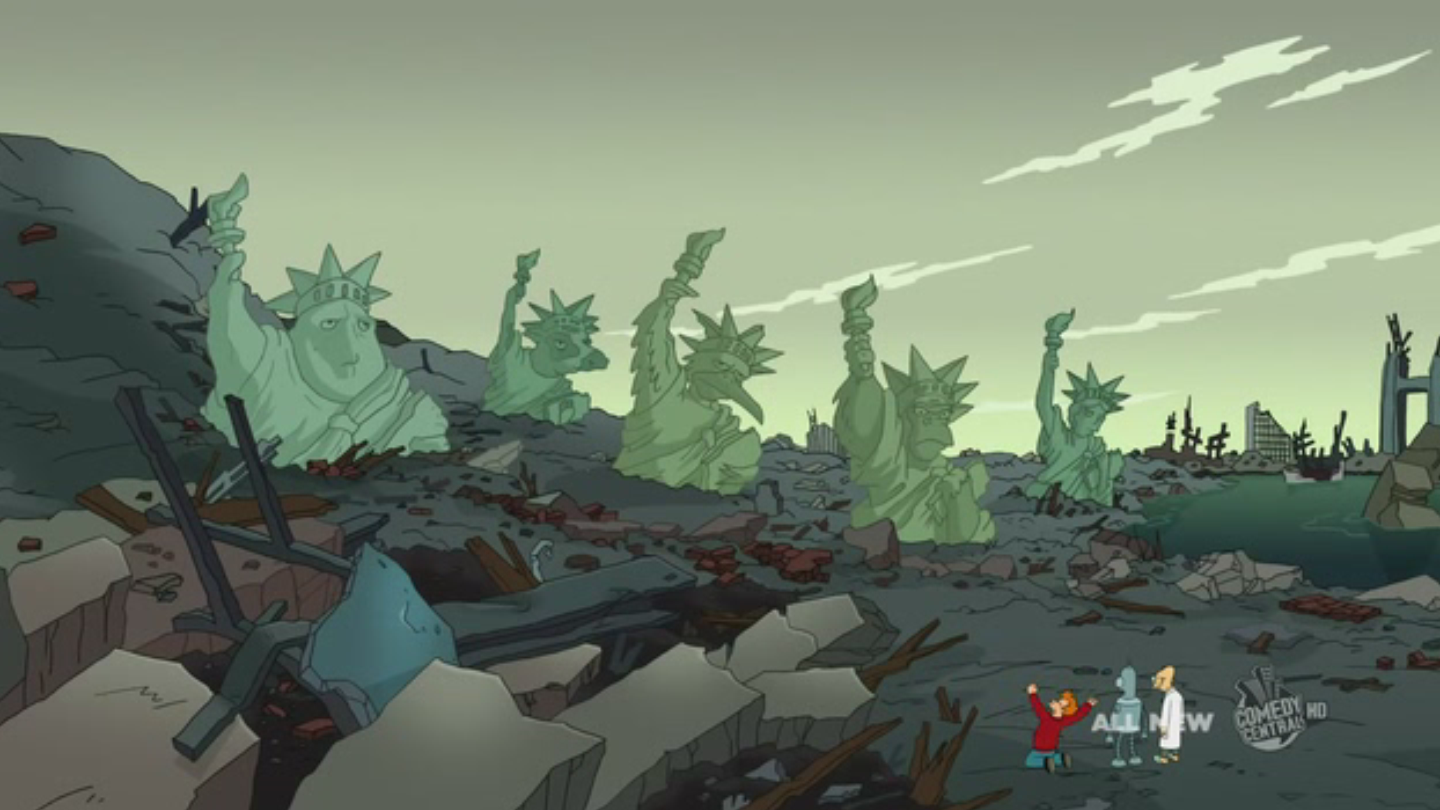
My next book will take place in the distant future of humanity and I’ve struggled with how to demonstrate the passage of time in relation to recorded history. After living beside ruins that are some 30,000 years old, at what point do they lose their allure and become scenery? That’s what I want to know.
I imagine that there will be cycles to history, events that reoccur every few thousand years, assuming that we blow ourselves up and have to start over again occasionally. If completely without power, in ideal conditions, solid state memory can last up to 50 years. So, unless we were able to make a non-physical type of memory that withstood the passage of time that wasn’t made from stone tablets, we would have to migrate data repeatedly just to retain it.
Or maybe we’ll have a train of monoliths to our own reoccurring civilizations, repeating like on-off states, to comedic effect?
I would hope that Jesus returns before anything like that happens. It’s my idle speculation that his return will pause the forces of entropy in our space time reality, actually. A better memory is still first on my Wishlist though.
