Killing the “Darlings”
Stephen King once said “Kill your darlings,” mostly in reference to the culling of filler details or characters.
I am not good at killing anything, “darling” or otherwise.
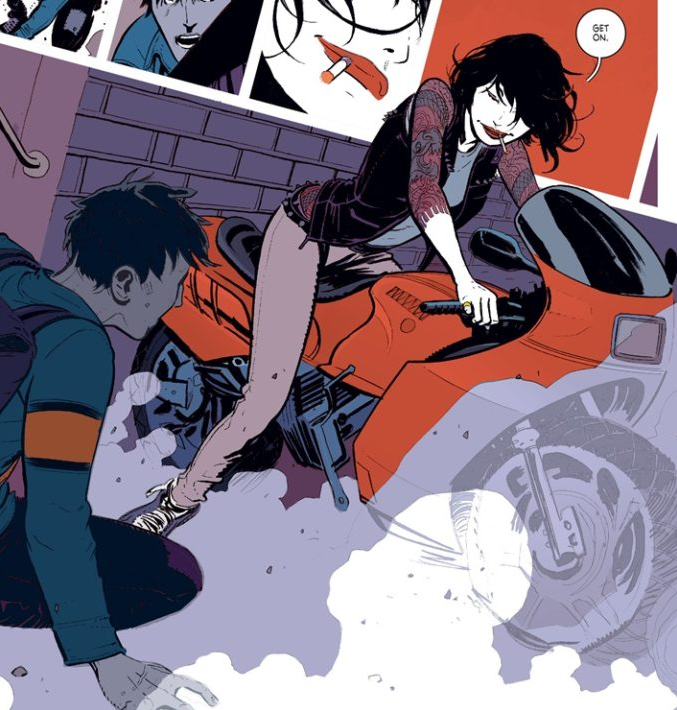
On my recent excursion up to Northern California, I went to Half Price Books and spent a kingly sum on out-of-print, deluxe-edition-adjacent comics. This time the series was Deadly Class, which contains everything you might expect from some coming-of-age drama, only with more drug use and ultra-violent encounters with white trash meth heads that commit acts of bestiality. Among many other things, the major recurring theme of the book is mental health awareness and the problematic/cynical mindset that life will, when one is most happy, eventually course-correct to tragedy. How this manifests in the life of the main character Marcus is split between being both in the wrong place at the right time and his own toxic/neurotic tendencies, thereby ruining the “good” things in his life, constantly. (Sometimes in catastrophic, scatological fashion.) Overall, the story has gripped me, despite the whole “school of assassins” schtick being rather underdeveloped. It’s almost a red herring of sorts, with the majority of the events in the book taking place outside of the school, and not even involving the curriculum in any meaningful way. Nevertheless, I yearn to return to it’s pages, to the catharsis of trauma. It’s really, well, just great.
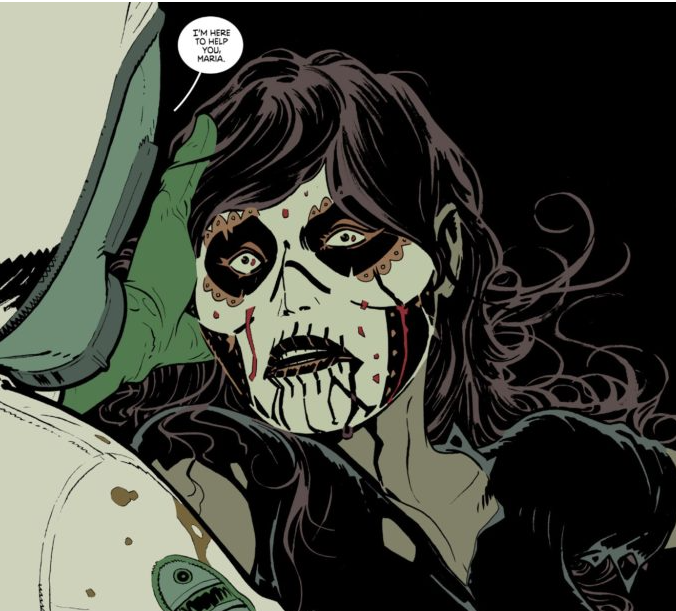
This masochistic ability to render tragedy on imaginary characters is difficult for me. (It’s even difficult for me in role-playing games.) My desire to see a character out of a bad situation often overpowers me, and leads me to believe that I lack the confidence to truly subject my characters to pain, even cruelty. It’s possible that, maybe, the best storytellers are sociopaths. To reach a level of detachment so severe that the author of a world can strike down an entire coterie of characters and feel nothing. It’s the only reason I can think of for why I felt physically sick when, in Deadly Class, Marcus looses his girlfriend Maria at the end of the first major story arc of the 56 issue run. (Get a grip, Stuart!) Of course, things aren’t what they seem, and these tensions eventually resolve themselves (as they are wont to). I also had a hard time watching The Boys when it first aired on Amazon Prime, but that could have had something to do with Garth Ennis’ similarly cynical mindset and the resulting deconstruction of both DC Comics pantheons and American expressions of Christianity as well.
I’m beginning to think my aversion to conflict is pathological.
A good writer, in my mind, is able to extricate themselves from their work, so that the book/comic/play/film becomes its own self-contained ecosystem. Compare this to an immature writer, where the story is often an extension of the writer’s own insecurities or desires. There was a weekly story that I wrote on DeviantArt ages ago (when I was in middle school) that very much was a projection of my own boyhood fantasies. I was the main character, the hero. The love interest was my ideation of the ultimate girlfriend. The villain was a crude representation of everything I thought I hated. The setting, an amalgamation of every anime/video game I had connected with up to that point. Stories can be written like this and still be okay but, by design, they are always limited by the writer’s frame of reference. Even worse, they can easily be derivative and preachy. (This is why I don’t watch Family Guy anymore, ever since Brian Griffin became a proxy for whatever Seth MacFarlane was upset about that week.)
How do you create a character that isn’t you though?
One way I have been able to do this is by seeing a character as an autonomous individual with a past, present, and potential future, assuming they continue in their current line of choices. They are functionally sentient and psychologically distinct from you. They are subject to all the hazards and limitations of the world that you have created, as well as subject to the bad actors therein. So if one of them gets killed, or suffers a failure, it’s because the world’s architecture allowed such a thing to happen in the first place. In the first Matrix film, Agent Smith makes an interesting observation also that supplements this idea:
"Did you know that the first Matrix was designed to be a perfect human world? Where none suffered, where everyone would be happy. It was a disaster. No one would accept the program. Entire crops were lost. Some believed we lacked the programming language to describe your perfect world. But I believe that, as a species, human beings define their reality through suffering and misery. The perfect world was a dream that your primitive cerebrum kept trying to wake up from. Which is why the Matrix was redesigned to this: the peak of your civilization."
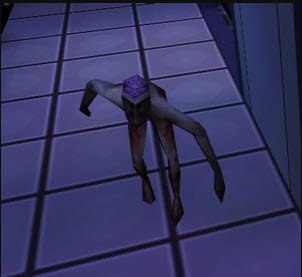
I think our fallen nature has conditioned us to expect bad things to happen, so a story lacking any tangible consequences results in the reader being pulled out of author’s world. When I had dinner with a friend on Monday night, he (Generation X) observed that modern video games represented a coddled Millennial paradigm of infinite lives and respawns. It made me think of games like System Shock 2, where players could actually play themselves into a corner and be forced to restart the game earlier back in their run. Maybe a world only carries true weight if not playing by its rules results in suffering terminal consequences?
God help you, if this is the last thing you see and you’re out of bullets.
SW
